2026 In Person Emerging Scholars
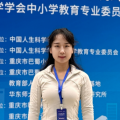
Nermin Karademir

Nermin Karademir

University of Cambridge, United Kingdom

Nermin Karademir recently completed her PhD at the Faculty of Education, University of Cambridge, where her doctoral research examined children's meaning-making through narrative apps on iPads in early years settings. She specialises in educational technology, early childhood education, and AI's implications for young children. Nermin continues to supervise Education Tripos students at the University of Cambridge and currently works as a researcher on a literacy project with the Open University's Reading for Pleasure Team. Her research interests are transdisciplinary, including children's media and digital literature, human-computer interaction, and AI in Education (AIED) in early years contexts.

Yusra Saleem

Yusra Saleem

University of Karachi, Pakistan

Yusra Saleem is a clinical researcher and psychophysiology scholar from Karachi, Pakistan. She is currently pursuing a PhD at the University of Karachi, focusing on multimodal interventions for chronic pain. Her work spans clinical research operations, psychophysiological assessment, and global health, with published studies in BMJ Open Sport & Exercise Medicine and other peer-reviewed journals. She has served in academic leadership roles, contributes as a reviewer for multiple journals, and has received national and international certifications in clinical research, global health, and neuroscience. Her research aims to bridge behavioral science, physiology, and evidence-based practice to improve health outcomes.

Sunandha Shanmugaraj

Sunandha Shanmugaraj

Ontario Tech University, Canada

Sunandha Shanmugaraj is a doctoral student at Ontario Tech University specializing in Equity, Diversity and Inclusion in education. With over ten years of experience, she has worked in schools across Canada, Rwanda, the UAE, and Mexico. She holds a Master of Education in Social Justice Education from the University of Toronto, a Bachelor of Education from Western University, and a Bachelor of Arts in French Studies from York University. Her research examines how mispronunciation, shortening, or renaming of South Asian students’ names affects their identity, belonging, and wellbeing. Outside of academia, Sunandha enjoys travelling, dancing, and baking.

Ayat Tarazi

Ayat Tarazi

An-Najah National University/Palestine Technical University, Palestine

Ayat Tarazi is an Assistant Professor and researcher specializing in English language teaching, EFL engagement, and AI integration in education. She works as a part-time instructor at An-Najah National University and Palestine Technical University- Kadoorie. She serves as a peer reviewer for several international journals and has published in several Q1 outlets. Dr. Tarazi earned her PhD with distinction from the University of Granada. Her academic experience includes teaching undergraduate and graduate courses, supervising research projects, evaluating curricula, and contributing to digital learning initiatives. She is actively involved in research on technology-enhanced learning and innovation in English language education.

Mengfei Han

Mengfei Han

Shaanxi Normal University, China

Mengfei Han is a doctoral candidate in Curriculum and Instruction at Shaanxi Normal University in Xi’an, China. Her research focuses on AI literacy and elementary school teaching. She previously worked for six years as a primary school Chinese language teacher, experience that continues to shape her academic perspective. Her broader interests include curriculum development, pedagogical innovation, and the connections between educational theory and classroom practice.

Wenjia Tan

Wenjia Tan

University of Macau, China

Wenjia Tan is a second-year computer science master's student at the NLP2CT Lab, University of Macau. She is interested in the nature of biological and artificial intelligence. Her research focuses on developing more effective, explainable, and human-centered AI to enhance human intelligence. She has five years of working experience from Tsinghua University as Lab Manager and Assistant Engineer in the Tsinghua Laboratory of Brain and Intelligence, contributing to NSFC, corporate, and NGO-funded projects in cognitive development, brain and music, and education. She has also established an online research platform promoting collaboration between the public and scientists.
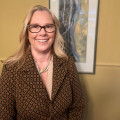
Wendy Mockler Giles

Wendy Mockler Giles

University of Illinois Urbana-Champaign, United States

Dr Wendy Mockler Giles is an educator and system leader based in regional New South Wales, Australia, whose work focuses on curriculum innovation, virtual learning, assessment, and inclusive educational practice. She currently serves as Virtual Learning Coordinator within a large Catholic education system, where she has contributed to the development of a virtual school model that foregrounds both relational and high-impact pedagogies. She also teaches senior Economics and Business Studies. Wendy holds a Bachelor of Economics, a Graduate Diploma and Master of Education, and a Doctorate of Education from the University of Illinois Urbana-Champaign, where her research examined virtual learning, student aspiration, and educational equity in regional and remote contexts.
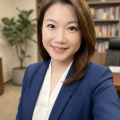
Kate Wong

Kate Wong

The University of Hong Kong, China

Kate Wong is an EdD candidate at the Faculty of Education, The University of Hong Kong (HKU), where her doctoral research explores Digital Multimodal Literacy, with a particular focus on teachers' multimodal literacy practices in L2 classrooms. Her work sits at the intersection of English language education, digital pedagogy, and teacher professional learning. Prior to her doctoral studies, Kate served as an English teacher for nearly a decade in secondary schools in Hong Kong, and currently works as a Curriculum Development Officer at the Education Bureau. As both a practitioner and policy contributor, she is committed to bridging theory, practice, and policy in education.

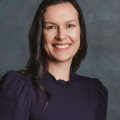
Francisca Oladipo

Francisca Oladipo

Thomas Adewumi University, Nigeria

Francisca is Professor of Computer Science and Vice-Chancellor of Thomas Adewumi University, Kwara State, Nigeria. A Fellow of the British Computer Society, Nigeria Computer Society, and African Scientists Institute; her research spans AI ethics, FAIR data governance, cooperative AI, and culturally responsive digital education. She also leads VODAN-Africa, deploying FAIR Data Points across health facilities in eight African countries. She serves on the CODATA Executive Committee and as Secretary-General of the KU8+ Consortium of universities in Kwara State. A PostDoctoral Fellow of MIT and alumna of the US State Department TechWomen programme, she has received research grants from Google, the Dutch Ministry of Foreign Affairs, and other international bodies.

2026 Online Only Emerging Scholars

Muhamad Firdaus Mohd Noh

Muhamad Firdaus Mohd Noh

Universiti Kebangsaan Malaysia, Malaysia

Muhamad Firdaus Mohd Noh is an experienced educator with over thirteen years of service as an English language teacher. He is currently pursuing a PhD in Measurement and Evaluation at Universiti Kebangsaan Malaysia (UKM), where his research focuses on developing skill-based language assessments. His scholarly interests centre on the application of psychometric models in language assessment, particularly in exploring how measurement frameworks can enhance the validity, reliability, and diagnostic value of assessment instruments. He has published in reputable journals and has presented his research at both national and international conferences. His academic accomplishments have been recognised through several prestigious awards, including the PROMS 2025 Distinguished Student Scholarship in Singapore and The International Research Foundation (TIRF) Doctoral Dissertation Grant Award.

Tomina Apiti

Tomina Apiti

Victoria University, New Zealand

Tomina Apiti is a doctoral candidate in Health and Wellbeing at Te Herenga Waka—Victoria University of Wellington. Her research examines leadership, identity, and transition, with a focus on the experiences of women navigating motherhood and service. She serves as Chair of The Backbone Collective. She serves on the Boards of ECPAT NZ and Arohanui Hospice, bringing a governance lens to issues of equity, learning, and organisational culture. A former non-commissioned officer in the Royal New Zealand Air Force, Tomina is interested in how lived experience and emerging technologies can shape inclusive leadership and future-focused educational practice.

Perla Suazo

Perla Suazo

Escuela Normal Indígena Intercultural Bilingüe Jacinto Canek, Mexico

Rosario Suazo Miranda is a professor at the Escuela Normal Indígena Intercultural Bilingüe “Jacinto Canek” in Chiapas, Mexico. She holds a Ph.D. in Regional Studies and is a member of Mexico’s National System of Researchers. Her work addresses diverse topics in the field of education from a critical perspective, with a particular focus on interculturality, intercultural and bilingual education, multigrade education, decoloniality, and popular education. She employs qualitative methodologies such as narrative inquiry and action research. Her primary research interest is improving educational conditions in marginalized and highly marginalized Indigenous communities in Chiapas, Mexico. She is currently conducting research on improving biliteracy among Indigenous children through translanguaging and multimodality.

Syed Azman Syed Ismail

Syed Azman Syed Ismail

Universiti Kebangsaan Malaysia, Malaysia

Syed Azman Syed Ismail is a PhD candidate in Mathematics Education at Universiti Kebangsaan Malaysia. His research focuses on the development of instructional materials to enhance students’ understanding of fractions and improve learning experiences in mathematics. His work adopts an Educational Design Research approach, integrating instructional design, visual representations and technology-supported learning to support effective classroom practices at the primary level. His research interests include digital media in education, visual communication in mathematics learning and innovative approaches to teaching and learning. He has published in international peer-reviewed journals and is committed to advancing meaningful and innovative practices in mathematics education.

Shannon M. Kane

Shannon M. Kane

University of Maryland, United States

Shannon M. Kane, Ed.D., serves as an Assistant Clinical Professor in the Department of Teaching, Learning, Policy, and Leadership at the University of Maryland. Her academic and professional endeavors focus on literacy education, teacher preparation, and teacher professional growth. Dr. Kane’s career began in international development, where she worked on initiatives focused on women’s empowerment and access to education. She later joined the inaugural DC Teaching Fellows cohort, teaching in both traditional public and public charter schools in Washington, D.C. Her professional experience includes time as an instructional coach, curriculum developer, professional development consultant, school leader, teacher-researcher, and adjunct faculty member. Dr. Kane holds a doctorate in Reading, Writing, and Literacy from the University of Pennsylvania, as well as master’s degrees in International Development and in Elementary Education/TESOL. Her research examines multiple dimensions of literacy and teacher development, including K–12 literacy instruction with an emphasis on critical literacy, the preparation and mentoring of teachers as literacy practitioners, the integration of technology into literacy pedagogy, the role of classroom discourse in literacy learning, and the ways identity shapes literacy practices and experiences.

Yong Tan

Yong Tan

University of Canterbury, New Zealand

Yong Tan holds a Master of Arts degree in literature studies and was a college lecturer for over 6 years, teaching and supervising English major students at universities in China. He is a final-year PhD candidate in the Faculty of Education, an online learning facilitator and tutor at the University of Canterbury, New Zealand. His main research interests focus on educational technologies in EFL teaching and learning, higher education studies, digital literacies, reading literacy and teachers’ identity.

In Their Words

Attending the conference was a truly enriching experience. Gaining insights from international colleagues helped me see my research in a broader light and inspired new ideas for potential collaboration."

Laura Sheerman, 2025 Awardee

As an Emerging Scholar, I enjoyed meeting and learning from global scholars; it was amazing to meet like minded people from various parts of the world who were passionate and making an impact. I thoroughly enjoyed my experience!"

Stephanie Tilley, 2022 Awardee

Through the conference presentations, I learned new ways of improving my teaching and engaging my students in the classroom and online. I also learned a lot from the other attendees."

Patience Agana, 2022 Awardee